
How to Reduce Cleaning Disruption in Busy Workplaces
A busy workplace still needs to be cleaned properly, but the way that cleaning is scheduled can have a significant impact on the people using the building.
Vacuuming during meetings, restricting access to a busy entrance or cleaning washrooms at peak times can quickly turn an essential service into an operational frustration.
The solution is not simply to move all cleaning outside working hours. A well-planned commercial cleaning service should consider footfall, working patterns, access requirements and the type of cleaning being carried out, so that standards can be maintained without getting in the way of the working day.

Plan Around Footfall, Not Just Opening Hours
Knowing when a building opens and closes is only part of the picture.
An office may be particularly busy between 8am and 9am, around lunchtime and when employees leave at the end of the day. Meeting rooms may be used intensively at certain times, while kitchens and washrooms experience their own peaks.
Cleaning schedules should reflect these patterns.
For example, vacuuming an open-plan office may be better completed before teams arrive, while washrooms and shared kitchens may require targeted servicing between peak periods. Entrances can be maintained throughout the day without scheduling more disruptive floor cleaning while people are constantly moving through them.
For offices and corporate workplaces, this level of planning helps cleaning fit around the rhythm of the building rather than simply following a fixed timetable.
Match the Task to the Right Time
Different cleaning tasks create different levels of disruption.
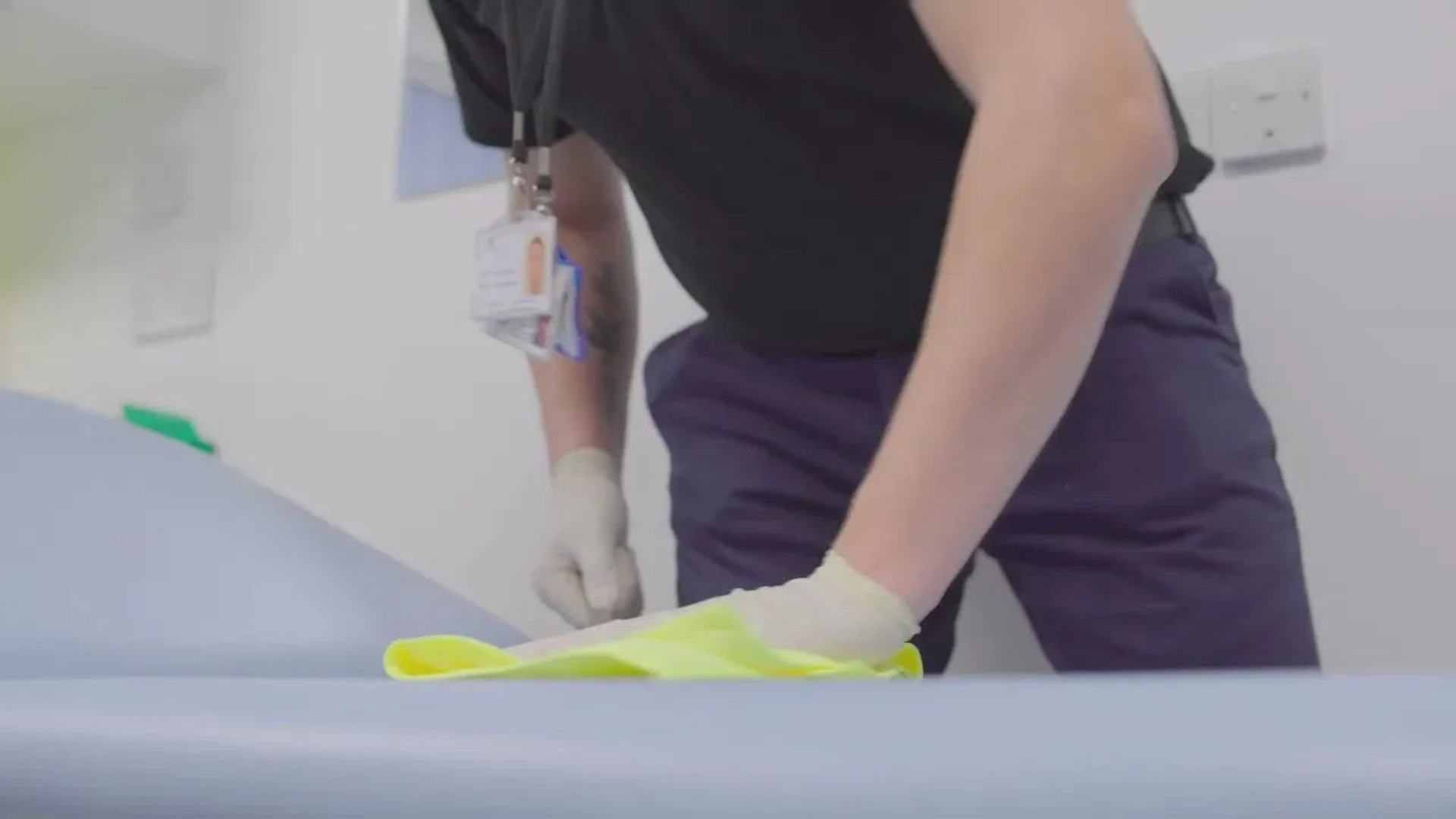
Emptying bins or wiping touchpoints can usually be completed around an occupied workplace with minimal interruption. Vacuuming, machine floor cleaning or tasks involving wet floors, equipment and temporary access restrictions require more careful timing.
A strong cleaning programme therefore considers what is being cleaned as well as when it is being cleaned.
Sequencing tasks correctly can also make a difference. Cleaning one zone at a time, allowing sufficient drying time and avoiding key circulation routes during busy periods can keep areas accessible while work continues elsewhere.
Use Daytime Cleaning Strategically
Daytime cleaning can be extremely effective when it is focused on the areas that genuinely need attention.
Rather than carrying out intrusive cleaning across the entire workplace, daytime teams can concentrate on high-use areas such as:
- Washrooms and consumable checks
- Kitchens and breakout spaces
- Reception and entrance areas
- High-touch surfaces
- Spillages and unexpected cleaning requirements
More disruptive or intensive tasks can then be scheduled for quieter periods.
This creates a more responsive service without unnecessarily increasing cleaning activity around employees, customers or visitors.
Treat Different Areas as Different Cleaning Zones
Large workplaces rarely operate as one uniform space.
An office building might contain reception areas, meeting rooms, open-plan workspaces, kitchens and quieter private offices. Warehouses and industrial facilities may combine operational floors, loading areas, offices and staff facilities within the same site.
Trying to apply one cleaning schedule to every area can create unnecessary disruption.
Dividing the facility into cleaning zones allows each area to be considered individually. A meeting room could be serviced between bookings, for example, while an operational warehouse area may need cleaning coordinated around deliveries, shifts or periods of lower activity.
This makes the cleaning programme far more responsive to how the facility actually functions.
“Flexibility is key for us, and we get that from Rapid Clean. We want the job doing well, not just hours being fulfilled. The Rapid Clean team feels like an extension of our team rather than an external company.”
- CIM, Berkshire
Consider Access, Safety and Drying Times
Reducing disruption is not only about convenience. It is also about ensuring cleaning activity does not introduce unnecessary hazards into a busy environment.
Wet floors, cleaning equipment and temporary access restrictions all need to be considered alongside normal staff and visitor movement.
Tasks involving floor cleaning are a good example. Simply choosing a quieter time is not enough; the schedule also needs to allow for drying before an area returns to heavy use.
Planning these details in advance helps protect access to essential areas and prevents cleaning from creating bottlenecks or avoidable interruptions.
Build Flexibility Into the Contract
Even a carefully planned schedule needs room to change.
Hybrid working patterns, events, seasonal peaks, shift changes or increased visitor numbers can all alter how a workplace is used. A cleaning programme designed around last year's working patterns may no longer be the most effective approach today.
Regular reviews allow cleaning frequencies and timings to be adjusted before small inefficiencies become recurring problems.
Rapid Clean's approach is built around flexible cleaning contracts and ongoing quality management, allowing services to evolve alongside the workplace rather than remaining fixed for the duration of the contract.

The Best Cleaning Often Goes Unnoticed
In a busy workplace, a successful cleaning service should feel integrated into the operation of the building.
The right areas are serviced at the right time, more disruptive tasks are planned carefully, cleaning teams understand when spaces are available and the schedule can adapt when working patterns change.
That requires more than assigning a set number of cleaning hours. It requires an understanding of how the building operates and how cleaning can support it.
Is Your Cleaning Schedule Working Around Your Business?
If cleaning regularly clashes with meetings, peak footfall or operational activity, the issue may not be the amount of cleaning being carried out - it may be how the service is planned.
Rapid Clean can assess how your workplace operates and develop a professionally managed cleaning programme around your busiest periods, different areas and day-to-day requirements.
Request a site survey or cleaning quote and speak to the Rapid Clean team about making your cleaning service work more effectively around your business.